
On July 20, 2019, I gave a short presentation as part of WATT’s Lightning Talks meetup. I am grateful and excited to be a part of this new group, which has as its goal – “to bring women technologists together so they can share their experiences with others, connect, and stay inspired!“
Hoping to provide a window into the work I do, I prepared these remarks.
I’m Sara Walters and I work for Infotech as a Content Analyst. Not everyone knows what a Content Analyst does so usually, I go by Tech Writer. But even that name can mean different things to different people. Instead of trying to create one definition, I’d like to discuss a set of skills and traits I’ve noticed in successful tech writers.
If you’re exploring careers in the tech industry, and you see yourself in some of these examples, technical writing might be a good fit for you. If you’re already in the industry as a developer or a project manager, I hope these examples will show how the tech writers at your office can complement the work you do, to provide customers with the best possible experience.
First, let me hear from you. What are some skills and traits you think a good tech writer should have?
Excellent writing skills
You don’t necessarily need a degree in English or Journalism to be a tech writer. For instance, I have an M.A. in I/O Psychology. But I’d argue that, you need more than excellent writing skills. People who enjoy tech writing tend to have a love of language, of word choice.
When listening to music on your ride home, do you take delight in imaginative song lyrics?
Do you have not just a feeling, but a strong opinion, about the use of the Oxford comma?
Would you love nothing better than to spend the afternoon reading?
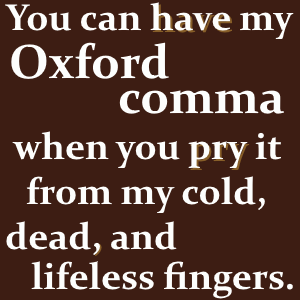
If so, then tech writing might be a good fit for you.
High comfort level with technology
Although you don’t need a degree in computer science or experience coding, it’s helpful if you’re familiar with basic coding concepts: loops, functions, if-then statements, database tables, and records. But most importantly, when faced with new tech, a good tech writer would not respond:
“Oh, computer stuff? I just call my best friend and she sets it up for me.”
Instead, we’d say something like, “I’m not familiar with that, but I can learn. Let’s get started.”
Excellent organizational skills
When working on your computer, how many of you create folders for your files in some sort of hierarchy? How many just keep all your files on your desktop screen?
Tech writers understand that the only way to produce clear information for customers is to maintain a structure and process for capturing thousands of tiny details. You don’t have to be the next Marie Kondo, but you do need to locate and reference your notes without it causing you stress.
Ability to think from the perspective of your audience
This is one of the most important traits for tech writing. For many years, I didn’t realize it as job skill that not everyone has! I say that because you might have this same trait and not realize its value.
Let’s take a techy idea like user authentication when logging in to a website. Even if you don’t know much about user authentication, I’ll bet some of you understand that your audience and their business needs should guide your writing.
For example, if you were writing about the topic for a system administrator, what types of information should you include? What tone would you recommend? What if you were writing for upper management so they could decide which authentication provider to use?
Research skills
Everyone understands that tech writers write content. What’s not as well known is that we often spend more time researching a change to the software or system than we spend writing about it.
Tech writing might be a good fit for you if you are both patient and tenacious about research. For each assignment, you’ll likely start with small bits of information. You’ll independently research the software, hardware, system, or concept, ask questions of those in-the-know, and gradually build content that provides your audience with accurate information that helps them achieve their business needs. Here’s an example:
You receive this message from a developer: I changed the default timeout setting from 30 seconds to 60 seconds.
You begin by keyword searching hundreds of web help topics and dozens of PDFs – user guides, training guides, installation instructions – to determine if this change to the system requires any changes to the documentation. You could add/edit/remove content for various audiences.
Your keyword search reveals two mentions of timeout setting in the installation instructions. But the difference between the two isn’t clear.
You ask the developer if either of the settings mentioned in the installation instructions is the setting he changed. He tells you that the two timeout settings have different purposes, and he changed the first one mentioned in the instructions.
You update the length of the default setting, and reword the descriptions of both timeout settings to make it clear that they pertain to different functions.
Now What?
Did you see yourself in some of those examples? If you’re interested in tech writing as a career path, you may wonder how to showcase your skills and experience for a position that doesn’t require a particular degree, or even experience coding. In my opinion, the best way to show potential employers the skills and traits we’ve discussed is to create a great set of work samples to include with your resume.
After all, even someone with an English degree may not be able to write in a style that fits a company’s branding. It’s great if you having a minor in Computer Science, but how well can you think from the perspective of your audience when writing documentation? Work samples allow you to demonstrate those skills.
 @SaraSWalters